Remembrance Culture: How Germany Remembers
In the center of Berlin, about 2,700 concrete slabs stand on roughly 19,000 square meters. They show what remembrance culture can look like in practice.
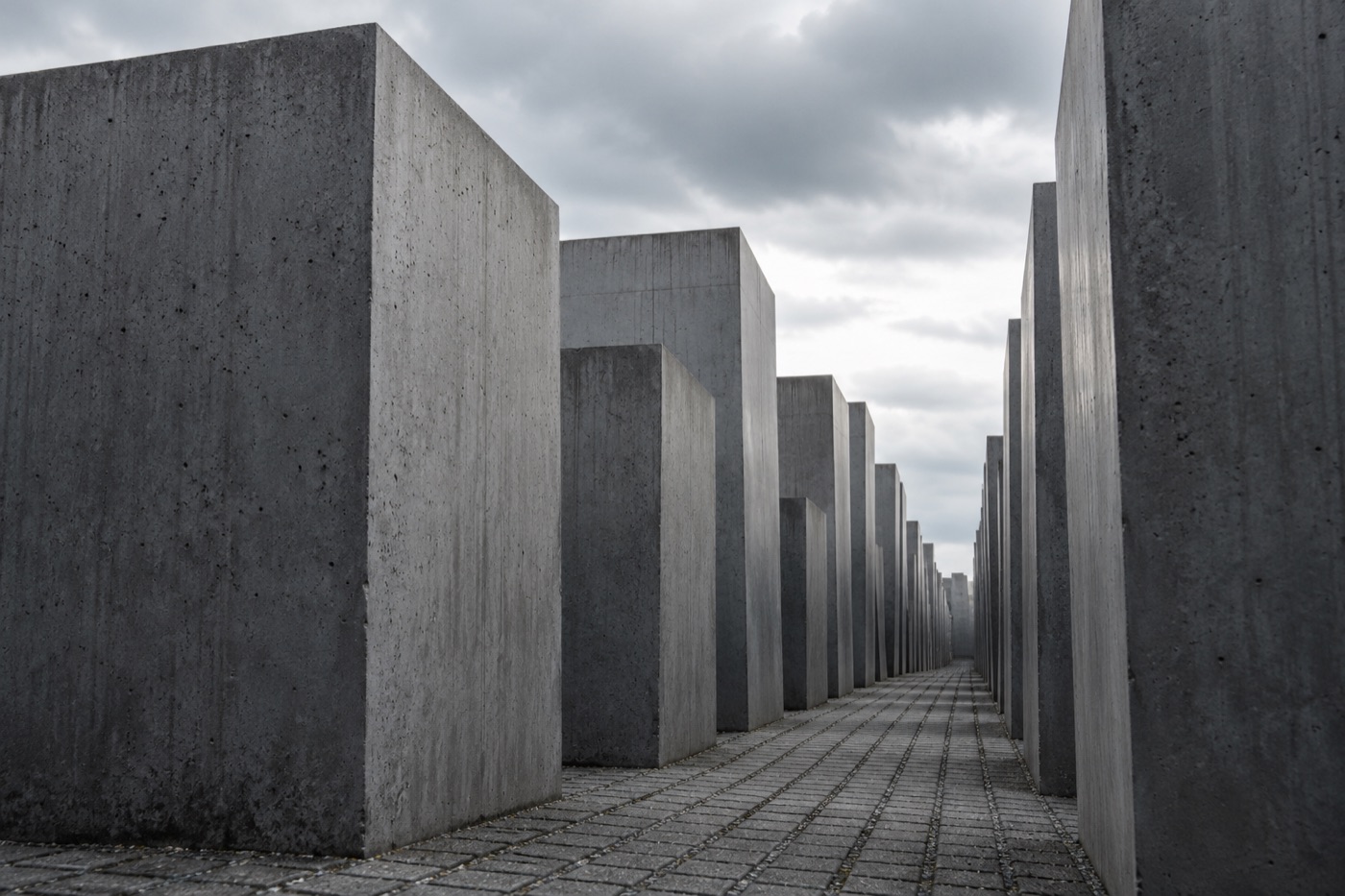
The Memorial to the Murdered Jews of Europe opened on May 10, 2005, and it is one of the best-known examples of how memory takes shape in public space. But what exactly does remembrance culture mean, and why does it take so many forms in Germany? This text offers an overview.
What Is Remembrance Culture?
Remembrance culture is an umbrella term for the many ways of deliberately remembering historical events, individuals and processes. It includes monuments, museums, memorials and educational programs, that is, both lasting places and ongoing activities. Remembrance culture is neither a single institution nor a single event. It describes how a society decides what it wants to remember and in what way.
The term is also criticized. Historians point out that the word memory is now used so broadly that it loses precision. The same objection applies to the umbrella term remembrance culture, which bundles together very different phenomena. Academic texts therefore often state more precisely which form of remembering is meant.
Monuments and Memorial Sites as Visible Forms
Monuments are the most visible part of this culture because they occupy a physical space and can be visited. The Berlin example makes this clear: it consists of a field of slabs that visitors walk through on foot, not of a classic sculpture on a pedestal. It is looked after by the Foundation Memorial to the Murdered Jews of Europe. That gives the memorial a permanent body responsible for its operation.
The term memorial sites is broader. It covers places tied to historical events, including those that did not begin as monuments but were described and opened to visitors later. In practice the two categories complement each other: monuments give memory a symbolic form, while memorial sites link it to a concrete trace of history.
Museums and Education as a Third Pillar
A monument can move people but rarely explains the context. That is why exhibitions, school materials and programs that help people understand what happened, and why it still matters today, are also part of remembrance culture. In this way memory is not confined to the object but reaches the people who engage with it.
Why the Term Remains Useful
Anyone who knows the concept can place texts about history and current public debates more easily. Behind the monument, the museum and the school lesson lies the same idea of deliberate remembering. Because the term is so broad, it pays to check in each text what exactly is meant. The next articles on this service use a memorial site, a date from the history of voting rights and a constitutional article to show how memory and the history of women in the twentieth century connect.